Choose risk
Related stories

Category: Capital Relief Trades Derivatives


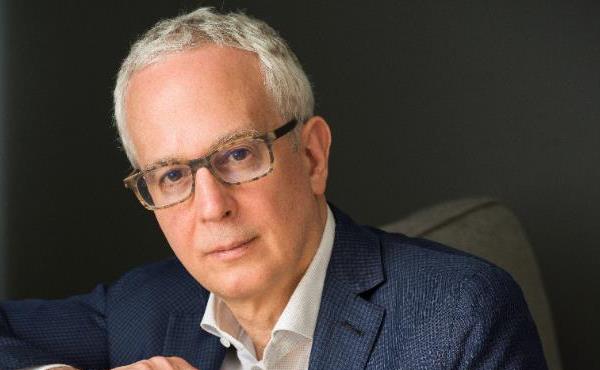
Richard Robb, ceo of Christofferson, Robb & Company (CRC), an investment manager in New York and London, and professor at Columbia's School of International & Public Affairs, answers SCI's questions
Q: How is CRC involved in the capital relief trade or risk sharing market?
A: We continue to invest in bilateral risk sharing transactions with European banks, as we have since 2003. Eighty-five percent of our deals are synthetic. Our AUM is around US$5bn, covering around US$80bn in reference assets.
Q: Anything new?
A: Three years ago, we launched a liquid fund, the CRC Bond Opportunity Trading Fund, that trades financials globally. It’s run by Brad Golding. Brad and his team take advantage of CRC’s knowledge of banks to invest in the fragmented market for bank capital instruments with an active short book.
Q: CRC has always focused on SMEs. Why is that?
A: There’s an old joke about a high school reunion, where alumni are prospering to various degrees – doctors, lawyers and the like. But one shows up in his private jet, to the astonishment of the others.
They wonder why their dumbest classmate is the richest. “It’s simple,” he explains, “I buy goods for US$1, sell them for US$1.50 and so I earn a 200% profit.”
In business, you don’t have to understand why something works in order to succeed – just let the invisible hand guide you via price signals.
Over the years, though, we’ve figured out why we’re drawn to SMEs. According to our research, family businesses really do form the backbone of European economies. Synthetic risk sharing transactions bridge the gap between banks straining for capital and investors who are underweighted in Europe.
Investing in deals tied to SMEs, we’ve come to appreciate that, unlike large corporates, SMEs are relatively detached from the overall economy. They usually default when the firm or its owners are struck by some idiosyncratic misfortune, such as an acrimonious divorce among the founders.
Q: Do you think the risk sharing market has room to grow?
A: Bank lending to German SMEs is around €4trn, one-quarter the size of the entire US banking system. While the term may be grating, European SMEs truly are an “asset class.”
Packaging the risk of bank exposures to SMEs and midcaps and transferring it to end investors is a big, long-term project. FHLMC and FNMA transfer most of their credit risk to capital markets through STACRs and CAS – why can’t European banks follow that model? Maybe in 20 years, if our market grows to its potential, people will look back and say, “core Europe used to be un-investible, there used to be a hole in capital markets.”
Q: Tell us about the book you’ve written.
A: This week, Yale University Press is publishing my book, Willful: How We Choose What We Do. It draws on economics and philosophy to explore decision making. I hope it will interest readers, including my peers in structured finance.
The classical view of economics is of rational individuals optimising efficiently. Behaviourists, on the other hand, see us as relying on mental shortcuts and conforming to pre-existing biases. But either way, we act “purposefully,” trying to gratify our preferences the best we can in light of our resources.
I argue that neither explanation accounts for the things that we do for their own sake, and that overlooking these actions leaves our picture of decision making incomplete. Choices made seemingly without reason belong to a second realm, which I identify as “for-itself.” This theory explains a lot of phenomena that can’t be shoehorned into models of purposeful choice, with or without behavioural bias.
Q: What’s an example?
A: In 2010, my colleague Andrew Robertson and I were trying to raise money for CRC’s new post-crisis risk sharing fund. The deals on offer from banks at the time seemed incredible – at least to us. But nothing we could say and no analysis we could present would convince some investors.
After a meeting with the managers of one endowment fund, Andrew said to me, “We could have levitated over the conference table and asked, ‘How’d you like to tap into these powers?’ We could have pointed at a chair and turned it into gold. They still wouldn’t have invested.”
Everyone on the sell-side or who raises money on the buy-side can relate to that frustration. I’ve come to believe that the investors’ reluctance had little to do with the usual factors: aversion to risk, information asymmetries, principal-agent problems, aversion to blame, aversion to ambiguity, herd mentality, or irrational fear. I simply couldn’t beam my beliefs into the investors’ heads, and the investors couldn’t act on a hunch that I (and others) might just be right.
The essential appeal of the opportunity we were pitching was unique, so it couldn’t be compared to opportunities that had come before. It stood for itself. There was no set of rules or data I could invoke to justify my belief.
Even if I could have persuaded the managers, they would’ve had to convince an investment committee up the chain. Then they might’ve had to wait for years before my beliefs were proven right.
The limits to the transmission of private beliefs are most burdensome when we deal with one-time events. There’s money to be made in these murky, anxiety-filled circumstances, when valid rules conflict and experience and judgment are key. It has to be like that: any rule that led to easy profits would get arbitraged away before you could act on it.
Faced with such contexts, how can institutions incorporate private beliefs in an investment process? This isn’t a problem rational choice can explain or solve, nor can it be ascribed to behavioural bias. To me, it’s a gigantic neglected topic in finance.
Q: So you’re contrarian?
A: No. The advice “zig when others zag” is useless. It’s become so conventional that it’s impossible to follow. If everyone decides to be contrarian, then everyone’s the same, and no one is contrarian.
Rather than contrarian, thinking has to be independent. Since everyone has a provisional hold on their capital to some degree, you need an institutional setting that lets you hang on.
Q: How did you come to write Willful?
A: Most nonfiction books apparently originate through “reverse inquiry”, to use a term that will be familiar to SCI readers. I wrote a paper in an academic journal in 2009 called “Nietzsche and the Economics of Becoming.” Seth Ditchik, now the editorial director at Yale, read the paper, contacted me from out of the blue, and said, “Besides rational choice and behavioural economics, there’s a third thing – acting on the world – and I think that’s a book.” Seth and his team stuck with me for the 10 years I needed to write it.
Q: Who is the audience for Willful?
A: At the start, I was writing mostly for academic economists and perhaps philosophers. But with each draft, equations migrated to footnotes and an online technical appendix, and the message became simpler. The book now targets a general audience. There’s even an audiobook.
The audience I’m most eager to reach is the teachers, students, and practitioners of economics and finance. Some of us are so steeped in rational choice theory that we become disoriented trying to reconcile it with actions that don’t quite fit.
Recognising the two realms – purposeful and for-itself – can serve as a therapy and demonstrate that behaviour can be something besides either successful optimising or a pathological failure to optimise. For instance, maybe procrastination isn’t so terrible, since life is at least partly a sport, and dull tasks become more exciting up against a deadline. Accepting such behaviour as intrinsically human can help us make better choices and be comfortable with the choices we already make.